
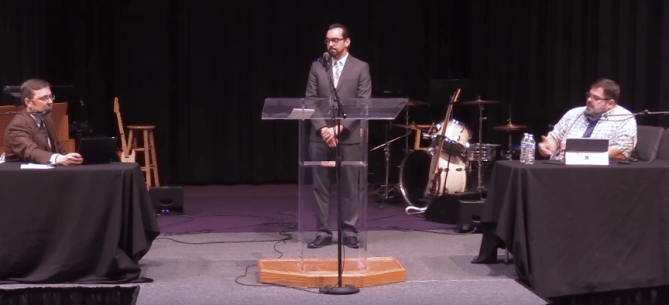
A few weeks ago (Friday, May 31st) I had the honor of being invited to Pine Grove Bible Church in Minneapolis to moderate a very important public debate on Christology.
Dr. Dale Tuggy and Mr. Chris Date met to debate the proposition that “The New Testament Jesus is human and not divine,” with Tuggy arguing for the affirmative, and Date the reverse.
 The event was organized by Kingdom of God Ministry and Missions, and supported by a variety of sponsors including Restoration Fellowship, 21st Century Reformation, The Minnesota Missionary Society, and House Light Ministries. Icthus Publications will also be publishing a two-views book later this year based on this debate which will allow Tuggy and Date the much-needed space for expansion on this immense topic. Very much looking forward to that publication.
As for the debate itself, Dr. Tuggy and Mr. Date both spent an exceptional amount of time preparing their opening statements and rebuttals, and both included a host of accompanying and very helpful slides. Both gentlemen presented their cases well and, in my opinion, provided a great introduction/launchpad for further individual study of this crucial and ongoing controversy among Christians. From a procedural standpoint, I was impressed with the professionalism and good spirit of both Dr. Tuggy and Mr. Date; only rarely did I feel the need to intervene, and by the time I did they were already getting back on-track. Overall, a fine example of good Christian debate that I hope others can learn from.
21st Century Reformation has put together an excellent HD video of the event, complete with crystal-clear audio and both presenter’s slides keenly edited in for your viewing pleasure. Please do yourself a favor and spend an evening listening, digesting, and considering the advice of both sides. I’ve included the video here:
As for my own take: while both gentlemen certainly lived up to their reputation as competent presenters, I believe Dr. Tuggy offered the most rational and substantial case. To those familiar with me or my work, that will be no surprise. I could devote a dozen articles to many of the claims made by Mr. Date, and if time allows I might rattle off a few. But readers of this blog will know that I am acutely interested in the historical case for ‘orthodox’ Christology—a case which Mr. Date, while an exceedingly earnest and articulate fellow, dramatically failed to make. While Tuggy provided what I thought was a sound riposte to Date’s historical claims during the course of the debate, I’ll provide a few of my own expansions on this interesting and important subject.
Mr. Date begins his historical argument
 Date begins by telling us that: “Christian theology and biblical exegesis ought not to be done in a historical vacuum. The Holy Spirit has been in operation within the church from the beginning.” He insists that we only “stand on the shoulders of giants and we ought to be doing our exegesis and theology with the early testimony of those giants in mind…”
Later we will learn that the “giants” (and church councils) whose opinions he implies are directly motivated by God are actually various representatives of what historians have called “proto-orthodox” or non-Gnostic “catholic” Christianity—in Date’s mind, a homogeneous body called “the church.” As we will also see, he assumes that each of these “giants,” belonging to this homogenous entity and being influenced by the same Holy Spirit, all believed and taught the same thing about Jesus. For an evangelical Protestant, this is an interesting appeal to tradition. But does Date, as a Protestant, really believe that the opinions of the “giants” and “councils” are valuable because “the Holy Spirit has been in operation within the church from the beginning”? It remains to be seen.
Mr. Date and the pre-Nicene Fathers
In the debate, Mr. Date claimed that his Trinitarian doctrine of “the deity of Christ” has been taught “from the beginning,” and that this view “has always been definitional of Christianity.” What he means by “definitional,” of course (he also calls it “foundational” and “essential” in a post-debate web interview), is that there has never been a genuine Christian who did not hold to his Christology. That’s a rather tall order, but not a novel or surprising claim in the context of this controversy. And in Date’s earnest pursuit of that tall order, I believe he failed to make the distinctions necessary to discern his own Christological position from that of the early Logos-theologians he invoked.
Date seems to assume that if anyone identifies Jesus as “theos,” or as a participant in creation, or as “incarnate” (having a literal and personal pre-existence before entering Mary’s womb), then he must be a Christian who believes that Jesus is (in some sense) an incarnation of the one God. The problem with this approach, of course, is the glaring fact that all Logos theologians and “Arian” subordinationist unitarians have said and continue to say the very same things about Jesus.
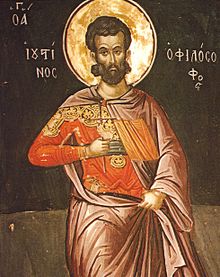 Date claims that because Justin Martyr says that “Christ is called both God and Lord of host” and because he says Christ “was with Moses and Aaron, and spoke to them in the pillar of the cloud…” (Dial., 36; c. 160 CE), that he believed Jesus was the one God. This is certainly wrong. Justin is famous for identifying Jesus as a “second god.” It was this entity, he says, not the immutable, transcendent God, who had come down and made contact with the Israelites. For Justin, Christ is explicitly “distinct from God” and is “another god and lord subject to the maker of all things; who is also called an angel, because he announces to men whatsoever the Maker of all things–above whom there is no other God—wishes to announce to them” (Dial., 56). Furthermore, for Justin, this Jesus is “the Son of the true God himself,” and he proclaims that “[we Christians] hold him in the second place, and the prophetic spirit in the third…” (First Apol., 13). Justin is no orthodox Trinitarian. He is a unitarian subordinationist with a Logos-christology of personal emanationism.
Date goes on to make some commotion about the fact that Justin says Jesus was not “created” like other things were. But there are a lot of reasons why a Middle Platonist committed to a demiurgical cosmology like Justin would say that. For example, in Justin’s mind, there is a fundamental difference between creation and emanation. “Creation” (in the sense that the birds, beasts, trees, and flowers were first produced) is not how the Son was made. He was not made out of nothing—the logos is the agent and source that sort of creation. Rather, the Son was emanated, he was generated or proceeded outward from God. But this generation is still a kind of creation; it still allowed, and even implied, that the thing being generated was younger than its source. This is why some later catholics, theorizing in Origen’s wake, felt the need to qualify their view of the generation of the Son as “eternal generation.” Of course, as Origen himself proves, you can even think that the Son was “eternally generated” and still think he isn’t the one God. While Date seems to think that anyone who says the Son was not “created” believes Jesus is the one God, he is simply playing with hard and fast categories that people like Justin aren’t.

Going forward, Date will have to do more than simply point to Justin or any father’s belief that the Son “proceeded forth” from God; we shouldn’t forget that for Justin the angels also “sprang forth” from God (See Dial., 128). Indeed, Justin says that he adores the Son “who came forth from [God]” as well as “the host of the other good angels who follow and are made like him” (First Apol., 6). Justin’s Jesus is not the one God; he is a heavenly being, the logos, a second god, who was emanated out by the one God before the creation of the world. This emanated being was used by God to create so that the one God himself, being the transcendent God of Platonism, wouldn’t have to change or get his hands dirty. While Date claims that Justin thinks this transcendent God personally became incarnate on planet earth, Justin says that: “No one with even the slightest intelligence would dare to assert that the creator and father of all things left his super-celestial realms to make himself visible in a little spot on earth” (Dial., 60). The Son is clearly a different being than this God, and necessarily so. For Justin, “intelligent people” (that is, Platonically-informed people) will understand that this second entity was “distinct” and “under” the transcendent God, and thus able to come to earth and get his hands dirty in a way that the first and highest God was not.
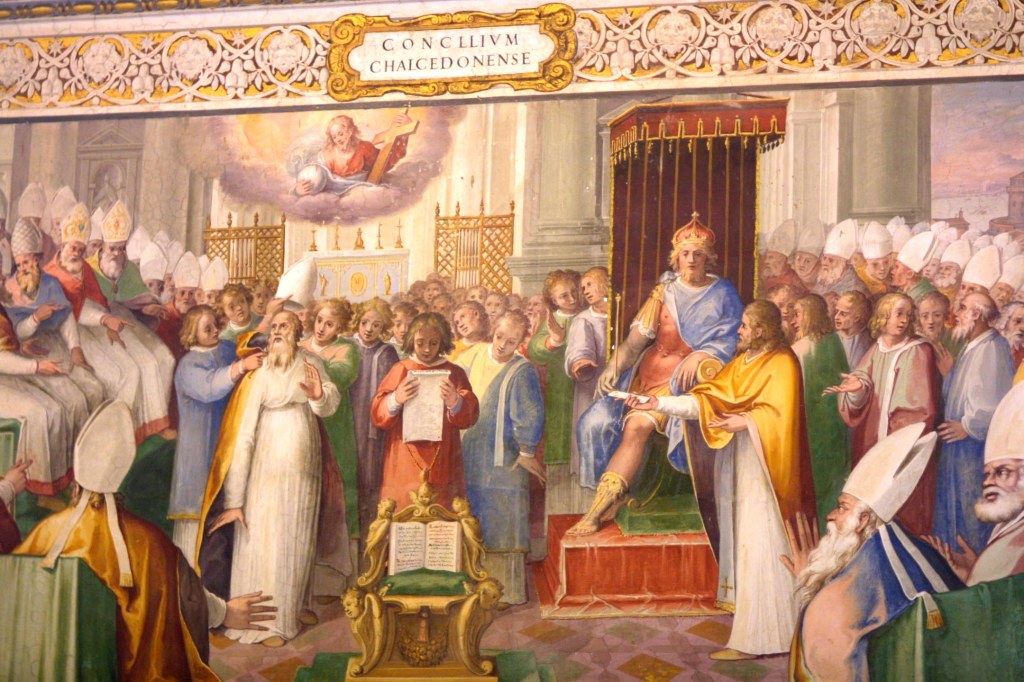
 Following his use of Justin, Date continued to pepper the audience with Trinitarian-sounding phrases which he thinks represent the constituent claims of his Christology. For example, he purports that because Melito of Sardis says that the Son created “together with the Father,” and is called “theos,” that means Melito believes what the Council of Chalcedon (451 CE) says about Jesus (indeed, in Date’s view, the councils affirmed what all Christians have always said about Christ). But once again, the problem with his appeal to Melito is that unitarians who believe in pre-existence can and do say the same things about the Son.

Date next pointed to Theophilus’ Christological emanationism as proof that he believed Jesus was “not created,” and was therefore “incarnate Yahweh.” But Date only makes the same mistake here as he did with Justin. While Date accuses Tuggy of “confusing the categories” in his patristic analysis on this point, the confusion is all Date’s. He seems unaware of how theologians like Theophilus employ the metaphor of the logos endiathetos and the logos prophorikos. In standard Logos theology of the second and third centuries, God was thought to have produced a second heavenly being some time before creation, and ostensibly for the very purpose of creation, and this being is the embodiment of God’s own indwelling word or reason; the prolation of the Son is not the actual transition of a personal entity (indeed, there was not a person (Son) dwelling within another person (Father), who then separated, but there was wisdom/word/logos dwelling in a person (Father), which later became embodied or perfectly expressed in God’s Son). The “going forth” of the Son marks the beginning of his actual, personal existence. Indeed, Tertullian, in Against Hermogenes 18, says it was God’s wisdom, not a person or another being, which was first “in him” and was later “born and created when in the thought of God it began to assume motion for the arrangement of his creative works.” Furthermore, what Date was hoping to prove in his debate by emphasizing texts from the LXX which feature the same “going forth” language used by the fathers is unknown to me, as he is only reinforcing that certain of them had a Christology of emanation—a position not incompatible with unitarianism, and a fact consistent with Tuggy’s interpretation of the theological development of the period.
 A further thought on Date’s use of Tertullian: While I think overall Mr. Date did well to engage Dr. Tuggy’s position in many areas (which Dr. Michael Brown failed to do his earlier debate with Tuggy) it was quite clear that he had not paid careful enough attention to Tuggy’s important 2016 article on Tertullian in the European Journal for Philosophy of Religion, Vol. 8 (which Date actually cited in his presentation). Date will ultimately have to deal with the fact that while Tertullian can speak of the Son’s nature as “eternal,” etc., (a thing which Tertullian, presumably under Stoic influence, also says is truly material and is in fact only a “portion” of the divine whole), he also quite plainly says there was a time that the (personal) Son did not exist. Indeed, Tertullian explicitly states that: “There was, however, a time when neither sin existed with Him, nor the Son; when the Lord was neither judge nor Father” (Tertullian, Against Hermogenes, 3). Tertullian then argues that just as God “became” the Lord of his created things only after they began to exist, so God “became the Father” when the Son began to exist. As Tuggy points out in his rebuttal period, Tertullian explicitly states that “the Father” is “older [and] nobler than the Son of God” (Against Herm., 18). And that “only the God [the Father] is unbegotten and uncreated” (ibid). If Date wants to debate Tertullian, he will have to deal with these statements—statements which I believe serve as clear guideposts for interpreting his more ambiguous sayings.
Date concludes his patristic arguments by saying that “If we want to take seriously these early fathers,” then we will agree with his assessment that they all held to Date’s own Christology. He says that “in no uncertain terms,” these figures taught that Jesus is “incarnate Yahweh.” Well… only in uncertain and ambiguous terms like “theos”!
 It seems to me that Date has only done what many evangelical apologists have done before him, and cherry-picked the fathers for Trinitarian-sounding language and uncritically pointed to the presence of certain Christological propositions (personal pre-existence, involvement in creation, emanation not creation, etc.)… which unitarians and Trinitarians alike have mutually acknowledged throughout history. In some ways, Date’s engagement with Tuggy was far superior to that of Dr. Brown. But in this area, he is no different from Brown, gesturing at anyone who calls Jesus “theos” and “incarnate” and calling it a day. This sort of roughshod historical argumentation, it should be clear, is not going to get anyone anywhere.
Mr. Date and the Church of the first Three Centuries
During the debate, Tuggy made several historical claims of his own, namely, that Trinitarian theology did not arrive until the mid to late fourth century CE. How did Date deal with Tuggy’s challenge that the Trinity and Trinitarian Christology are the products of doctrinal development? Simply put, and if I understand him correctly, Date thinks this development never happened.
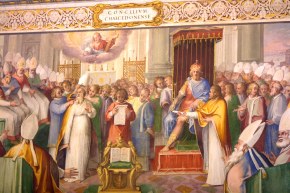 Following the standard apologetic narrative, Date identifies what are now called the “ecumenical creeds” (the first of which occurred in 325 CE) as Christological statements which “all major branches of Christianity have agreed to” and says they have done so “from the beginning.” Contra Tuggy, the councils which produced these statements, like Chalcedon (451 CE), do not represent intermediate stages along a process of Christological development. Rather they are more like visible reactions to the emergence of heretics who periodically sprang up to challenge a long-standing and universal tradition. In his later interview, Date argues further against Tuggy by pointing out that none of these so-called “ecumenical” creeds said that Jesus was not in some sense the one God (or, as he puts it, “exclusively human”).
Date ultimately seems unaware of the historical process by which these catholic councils received their ‘ecumenical’ status. None of us should forget, as experts on conciliar history have explained, that “The accounts of what happened which have come down to us were mostly written by those who belonged to the school of thought which eventually prevailed and have been deeply colored by that fact. The supporters of this view wanted their readers to think that orthodoxy on the subject under discussion had always existed and that the period was simply a story of the defense of that orthodoxy against heresy and error. But it ought to be obvious that his could not possibly have been the case” (R.P.C. Hanson, Search for the Christian Doctrine of God, pp. xviii-xix).
 What does Date do, I wonder, with the fact that many councils of this “catholic church” (some with greater attendance and territorial representation than the so-called “ecumenical” meetings) overturned Nicaea repeatedly, or that by the 360’s the large majority of Christendom was Arian (unitarian)? His claim that Dr. Tuggy’s unitarian Christology is far outside of “historical Christianity” is tragically uninformed. But it’s worth taking a moment to break down his wider claim a bit further: if Date says “the church” has always understood the “deity of Christ” (that Christ *in some sense* is the one God, ala Trinitarianism or Modalism) what he is also saying is that the church was not subordinationist, since subordinationism is necessarily incompatible with any doctrine which identifies Jesus as the one God. Placed in this light, we see clearly, from the standpoint of history, the over-wrought nature of Date’s claim. The church was not universally in agreement with the proposition that “Jesus is the one God,” and serious historians have known this for a long time:
- “Before Nicaea, Christian theology was almost universally subordinationist.” (Robert M. Grant, Gods and the One God, p. 160).
- “Every significant theologian of the Church in the pre-Nicene period, had actually represented a Subordinationist Christology” (Martin Werner, The Formation of Christian Dogma, p. 234).
- “With the exception of Athanasius, virtually every theologian, East and West, accepted some form of Subordinationism at least up to the year 355 CE; subordinationism might indeed, until the denouement of the controversy, have been described as accepted orthodoxy” (R.P.C. Hanson, Search for the Christian Doctrine of God, p. xix).
In this light, and since the first of the so-called “seven ecumenical councils” dates to 325 CE (Nicaea I), Date’s point in his interview that none of the “ecumenical” creeds say Jesus is a “mere man” tumbles away like useless debris. Tuggy’s retort during the debate that these are no more “early councils” than he and Date are “early Americans” is a good one, though Date shrugged it off and insisted that he is, of course, “not dumb.” And Date was right: he isn’t dumb at all. But he is misinformed. After Date realizes that the pre-Nicene church fathers he appealed to are not orthodox Trinitarians, he will have to pay the historical challenge more than a shrug and dispense with signaling towards “early councils.” Not only that, he’ll have to deal with the fact that his opponent’s theology is, in fact, not nearly as late as he claims.
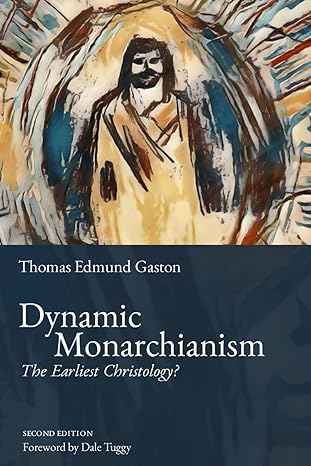 In the post-debate interview, Date unfortunately agreed with Schumacher that Tuggy’s “biblical unitarianism” doesn’t show up until the Enlightenment—a seriously uninformed conclusion, but not an uncommon one among apologists. It is clear to me that Date has never bothered to hear what unitarian historians and theologians have to say about unitarian history; he obviously hasn’t read Dr. Thomas Gaston’s recent book on this subject, or mine, or heard my presentation on Photinus of Galatia and the Photinians (fourth century biblical unitarians), in which I directly rebut this vaporous claim about the lateness of biblical unitarianism. I don’t expect him to have heard my take, of course, but I’m still disappointed that he failed to look before leaping into the apologetics bandwagon on this point.
“The Trinity” or just “the Deity of Christ”?
In the course of his later post-debate interview with Schumacher, Date pivots away from a historical argument for the Trinity and makes a point to say that it is specifically “the Deity of Christ” and NOT “the Trinity” that has been essential to Christianity from the beginning. So, are we now to conclude that “the Trinity” is, in fact, the product of a later age—some time after “the beginning” of Christianity? That the Trinity doctrine was not an essential teaching of the Apostolic church, and not so in the New Testament?
This argument, coming from a Trinitarian, is interesting in that it seems to force Date to accept that Modalists, who collapse the Father and Son and Spirit into a single person, are genuine Christians who are holding to the Apostle’s doctrine. If merely “the deity of Christ” is what was “definitional” and “foundational” from the beginning, then it follows that you really don’t need to be a Trinitarian—you don’t need to believe that God is three persons, you can believe that God is just one person, so long as you think that Jesus is that one God. I wonder what Date’s icon James White would say about his insistence that the “deity of Christ,” and “not the Trinity,” was the earliest and essential rule of the Christian faith?
 Date’s position is actually not too surprising. From my own experience as an evangelical Trinitarian, and from recent polling data, it is obvious to me that few evangelicals really care about the orthodox doctrine of the Trinity (or even talk about it); it is all about an unqualified affirmation of “the deity of Christ” (whatever that means). This is how someone like TV evangelist T.D. Jakes, a modalist, can be allowed to teach for years on the evangelical “Trinity Broadcasting Network.” Date’s new comment only reinforces my suspicion that the phrase “Jesus is God” often functions like a secret password for evangelical club entry: once inside the clubhouse walls, that phrase need not be explained or even talked about again. If you ever do think about it, you can mean something completely different than the person in the pew next to you (‘Jesus is the Father’ vs. ‘Jesus is NOT the Father but the second member of a divine triad’), and that’s okay, as long as you loudly affirm that “Jesus-is-God” means something true and “foundational.” In this light, and in light of Date’s emphasis, I can’t help but think that evangelical insistence on the dictum “Jesus-is-God” is largely and often energized by its perceived identarian value, for its ability to erect palisade walls around the community.
 Of course, Date’s emphasis on merely “the deity of Christ” and “not the Trinity,” seems to create problems of consistency for his general historical approach. Indeed, many of the catholic creeds and “giants” which Date says were guided by the Holy Spirit condemn modalism as heretical. They don’t think that believing in “the deity of Christ” is good enough. The later 4th-5th century statements (which Date somehow says are representative of what Christians have taught “from the beginning”—while at the same time denying this is the case) loudly insist that it is the Trinitarian version of the deity of Christ and incarnation that is foundational, definitional, etc. While Date seems to argue that it was (and is?) simply any version of the deity of Christ that counts as Apostolic and essential, many of the conciliar statements he appeals to point to a very specific Trinitarian Jesus as essential. So, which is it? Because Date implies these statements were arrived at through the guidance of the Holy Spirit, are we forced to suppose that only some parts of those creeds and writings were inspired and authoritative?
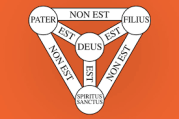 Despite his claim about the divine influence behind the fathers and the creeds, we know that Date is A-OK with modalism because he later says in his interview that the New Testament writers did NOT have the Trinitarian “being-person distinction” in mind, and that the being-person distinction is actually “not very important.” Of course, the being-person distinction is nothing less than the technical axis on which the entire Trinitarian dogma and exegesis turns. Indeed, Date himself later says that the being-person distinction is precisely how we solve critical exegetical problems like “having more than one creator in the bible.” So, is it important or not? It seems very important after all, yet Date also seems familiar enough with the data to know that the Trinity doctrine, resting on the being-person distinction, was a later development and is not to be found in the biblical documents.
 It is interesting to me, but not at all surprising, how much and how often Trinitarian apologists tend to differ in their answers to the challenge of historical development. Almost as if consciously contradicting Date’s statements, Dr. James White, on his own radio show, later said that the “being-person distinction” is actually very important in the history of the faith. He even criticized Tuggy for allegedly ignoring “how important” the distinction between being and person is in “historical Christian theology,” concluding that Tuggy “didn’t care to remain consistent on that.” If these words weren’t aimed in Mr. Date’s direction, they should have been.
Sola Scriptura or catholic tradition? or both?
 So why did Date take the historical route that he did in the debate? In his interview, Date gave the following reason: Many Protestants have a wrong view of sola scriptura, he says. It’s not the Bible alone, it’s actually the Bible plus the opinions of other extra-biblical Christian writers. He says that “the Holy Spirit gives teachers to the church, meant to equip them and edify them and build them up, and things like that.” Therefore, it’s “just wrong” to ignore what “generations” of catholics have said about theology and exegesis.
Here, a pattern begins to form. We recall that Date began his historical argument by telling us that: “Christian theology and biblical exegesis ought not to be done in a historical vacuum. The Holy Spirit has been in operation within the church from the beginning.” He insisted that we only “stand on the shoulders of giants and we ought to be doing our exegesis and theology with the early testimony of those giants in mind…”
First of all, who is Date even arguing against here? Who are these people out there who think theology should be done in a vacuum? I know Dr. Tuggy doesn’t think this; I know I don’t. In fact, all unitarian theologians that I know of are very much aware of what has historically been said by Christians throughout Church History. This bit about “historical vacuums” is a throwaway line, I think. The real meat is in these proximate claims that the Holy Spirit has been “in operation within the church” and that the Holy Spirit has “given teachers to the church.”
From a Protestant point of view, had Date simply said that “we stand on the shoulders of giants” and humbly suggested we keep the opinions or earlier catholics in mind, there would be little cause for concern. But he’s paired this sentiment with these claims about the doctrinal guidance of the Holy Spirit. The implication is that the Christological opinions of the “giants” and “councils” he is referring to were arrived at via God’s prompting. In this light, it seems that we should not merely “keep their testimony in mind” on the merit of their brilliance, or their sincerity as Christians, or even their nearness to the historical context of the bible, or anything so mundane. We should think twice about disagreeing with them because they were guided to their conclusions by God’s own hand.
But wait a minute. I thought we were Protestants? How “wrong” is it to ignore earlier catholics? How “wrong” is it to disagree with them? At the end of the day, what role does Date really think “church tradition” plays in the life of a Protestant?
 In some places, it almost sounds like Date wants to keep his position from sounding too Catholic; on the other hand, he insinuates that earlier catholic tradition is, in fact, authoritative and deserves our submission when he claims that it is infused with nothing less than the influence of God. At this stage in the game, Mr. Date seems like a traveler walking towards Rome and never quite getting there—the needle on his latent Protestant compass, perpetually stuck pointing towards the Bible, casts him just shy and ensures he never truly arrives.
While Date would like to think that his two-fold approach to church doctrine (sola scriptura + church tradition) strikes a healthy balance, he overlooks one very important thing: the fact that the “church tradition” element in his scheme, armed with the divine influence of “the Holy Spirit,” will always overpower the right to private interpretation of the scriptures. I encourage Mr. Date to be a good Protestant and skip this tight-rope walk for more sure-footed ground.
As Date tries to honor both the principle of sola scriptura and the historical catholic insistence that certain church councils were guided by God, he puts himself in a hard spot. Despite his emphasis on the divine influence behind these catholic “giants” and “councils,” we can presume that Date, on the virtue of his Protestantism, does think that the spiritual guidance which once influenced these “giants” and “councils” eventually departed. But when? And to what extent? Indeed, when “the church” he is referring to made its authoritative rulings on the role of Mary, icons, the sacraments, and indulgences—rulings which we assume Date, as a Protestant, denies were influenced by God—where was the “operation” of the Holy Spirit? Or does he think that the Holy Spirit continued to guide church doctrine in some areas, or in some church councils, but not all? Indeed, important questions abound: Which Christological rulings of which councils are authoritative for Protestants today, and why? If the Holy Spirit has been operating in the church from the beginning, which Christian writers (from “the beginning” to our present day) should we “keep in mind” when we do Christology? And, ultimately, what is to prevent any Catholic from quoting Date’s claim about the operation of the Holy Spirit right back at him in defense of any Catholic dogma?
 In the end, I can’t help but feel like Date makes these claims about the Holy Spirit and the church fathers because of the clout he thinks such appeals to catholicity can lend to his other arguments, not because he genuinely thinks the rulings of the conciliar system are authoritative (guided by the Holy Spirit). Careful listeners will discover that Date pays what seems to be only a glorified lip-service to the creedal traditions: one moment he is instructing us to always “keep an eye” on it, warning us about Tuggy’s dangerous deviation, and the very next moment his keen eyes are casting the same doubtful looks towards those conciliar opinions as Tuggy’s. He even reveals, in his interview, that he is “on the fence” about the doctrine of eternal generation, despite its ratification in the creeds. Indeed, underneath all the talk about tradition, I see Date revealing his own misgivings.
In the end, I wonder if Mr. Date has quite made up his mind about all of this. At present, he seems to want to have it both ways: in the interview, and after implying that the Holy Spirit is responsible for the historic tradition with which Tuggy disagrees, Date says that just because Tuggy’s theology is outside the bounds of what this historic tradition says, that “doesn’t make it wrong.” But if it is true that God himself is standing behind this tradition and has personally guided and influenced it through these great teachers, wouldn’t that make Tuggy automatically wrong? Does Date have a hard time saying that so plainly because he is a Protestant and he knows that scripture, and not catholic tradition, arbitrates essential dogma for Christians? At this point, I am pressed to conclude that Date’s comments about the operation of the Holy Spirit, and his accusations and warnings about Tuggy’s doctrine being outside the bounds of historical tradition, are hollow scare-tactics designed only to enhance his other arguments.
Getting Date’s attention
There is, of course, much more to say about Date’s use of church history. But I’ll close out this (long) post by highlighting what I think was a very important question posed by Tuggy during the cross-examination:
“Mr. Date, in the process of rethinking catholic doctrines about hell, I recall you saying that the lateness of eternal conscious torment, the lateness of the popularity of that view, got your attention, right? [ . . . ] So if you were convinced through the study of the early church fathers that we only see a Jesus who is fully divine and one of three persons in God late in the fourth century, would that also get your attention?”
Date replied: “Indeed it would get my attention.”
 Knowing that Date, as a theologian and apologist, has bravely (and I think rightly) abandoned other traditional (and, according to most evangelicals, “essential”) catholic doctrines, I wonder what would happen if Date simply expanded the scope of his restorationist project? Many of those who believe as Dr. Tuggy does, including myself, have come to such beliefs through precisely the kind of historical process which has already led Date to break with ‘orthodox’ tradition in other areas. Both Date’s response above, and his public history, demonstrate the high value he (wisely) places on the history of Christian dogma—which we must not forget is always the greatest critic of that dogma.
Christians in general should always resist the temptation to bend catholic history to fit their favored development narratives, no matter how widely or how long those narratives have been held. Regardless of traditional alignment, we must all refrain from pushing historical Christians to say what we want them to say, or what we feel like we need them to say. We must follow Mr. Date’s good advice and “take seriously” the views of these early writers. Likewise, if we are Protestants, and if we can recognize that certain claims were added to the Christian doctrine of God over time, we should also be asking ourselves the important question: at what point do these additions become not preservative but destructive of “Christian doctrine,” as Protestants define “Christian doctrine”?

When Mr. Date realizes that he can no longer appeal to the catholic fathers of the first three centuries, and that Trinitarian Christology is, in fact, the product of later development, he will be faced with a very important decision: He can either go full Catholic and truly accept the proposition that “the Holy Spirit was in the ecumenical councils,” and all of its implications for the Christian faith and life, or he can go full Protestant and truly accept sola scriptura, and the unitarian theology which lies at the inevitable end of that road.
I hope to be able to post further thoughts on this important debate and ongoing conversation soon.
Best of luck to both Mr. Date and Dr. Tuggy on their upcoming book. After their good and thought-provoking performances in the debate, I’m sure I’m not the only one waiting impatiently.
I wonder where things will go?
Links:
Dr. Dale Tuggy – https://trinities.org
Mr. Chris Date – http://rethinkinghell.com
Icthus Publications – https://www.ichthuspublications.com/
(Be on the look-out for the forthcoming two views book)
Tuggy’s follow-up interview with Schumacher: here
Date’s follow-up interview with Schumacher: here


 Kegan Chandler, PhD
Leave a comment