
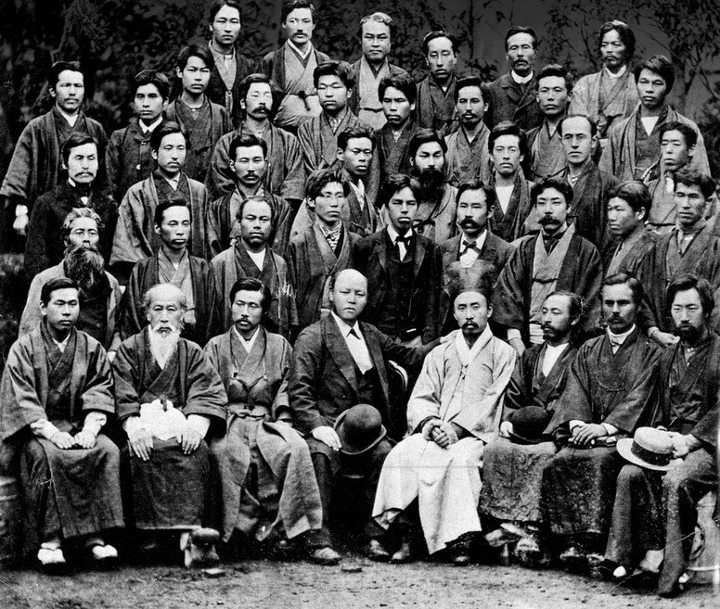
I’ve recently written an article on unitarian Christianity in Japan and certain methodological problems and prejudices in the study of its history : “Unitarian Monotheism in Meiji Japan: Confucian Ethics, Syncretism, and the New Testament.” Most in the West are entirely unaware of the fascinating history of the Japanese unitarians who made waves during Japan’s period of modernization, and it has been my joy to bring this subject to light, along with what I think is a strong critique of the incredible (but not surprising) ways they’ve been treated by many modern scholars.
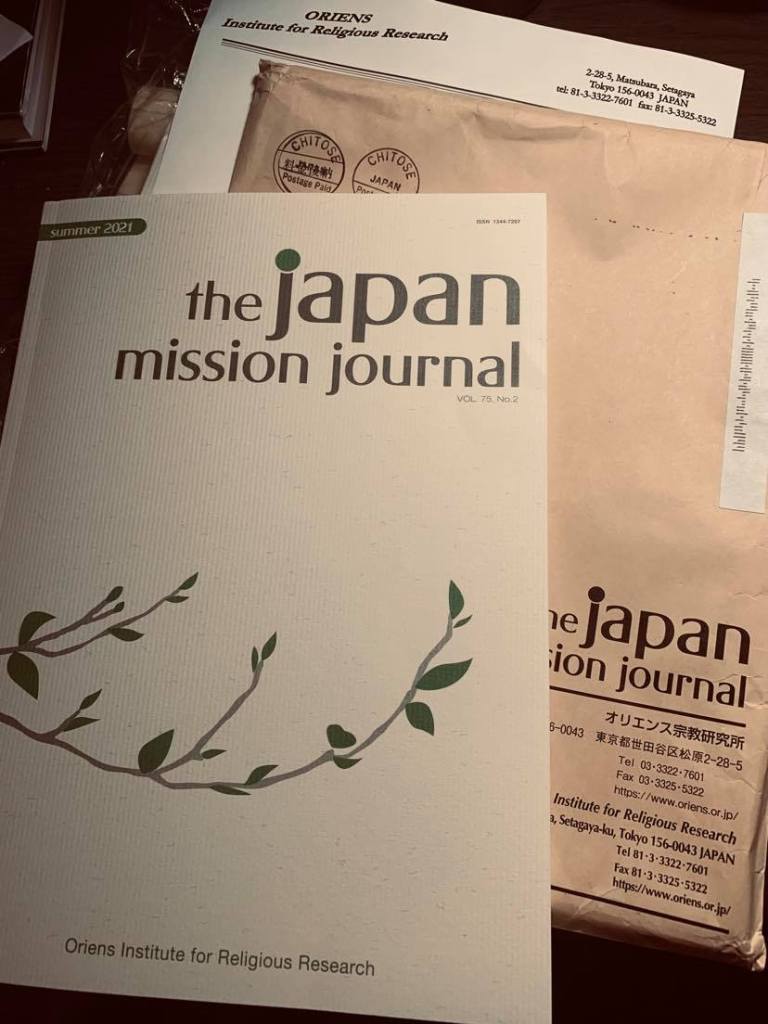
I’m honored to have the work published in the famous, 75+ year-old Catholic journal of Christian studies in Japan, The Japan Mission Journal, which “deal[s] predominantly with all facets of evangelization and inculturation of Christianity in Japan.” The JMJ is published dutifully by the Oriens Institute for Religious Research in Tokyo. Many thanks to the journal’s brilliant and esteemed editor, Dr. Joseph S. O’Leary.
Here’s the abstract:
“During the period of Japan’s modernization (1868-1945), many Japanese Christians rejected the doctrine of the Trinity and embraced unitarian theology. Explanations of this phenomenon have appealed to a Japanese misunderstanding of the Trinity, an ignorance of church tradition, a preference for personal experience over the Bible, and a desire to syncretize Confucian ideology with Christianity. This article explores the historical interaction between Japan’s cultural bedrock of Confucian ethics, the Christian doctrine of the Trinity, and the unitarian interpretation of church history and the New Testament, in order to clarify the theological concerns of the period. As will be demonstrated, the reasons why many Meiji-era intellectuals rejected the Trinity were far more historically and biblically-motivated than previous studies have allowed.”
- You can download and read the paper here.
- “Unitarian Monotheism in Meiji Japan: Confucian Ethics, Syncretism, and the New Testament,” in The Japan Mission Journal, Vol. 75, No. 1 (Tokyo: Oriens Institute for Religious Research, 2021), pp. 102-118.

 Kegan Chandler, PhD
Leave a comment