

Last weekend I had the pleasure of attending a lecture by world-renowned biblical scholar Dr. James Charlesworth, Professor of NT Language and Literature at Princeton. Charlesworth was joined by Dr. Lee McDonald (Acadia Divinity College) at the beautiful Lanier Theological Library for an evening of discussions around the Apocrypha, the Dead Sea Scrolls, the canonization process, and more. I knew I would enjoy Charlesworth’s lecture, entitled “The Theological Value of the ‘Rejected Texts’ and the Dead Sea Scrolls for Understanding Jesus,” but for me the event took an unexpected turn.
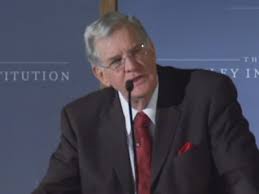
First, I should say that Dr. Charlesworth is an extraordinary scholar whose work has been rather valuable to me. I, like many others, have especially enjoyed his two famous volumes of OT Pseudepigrapha. Charlesworth is a trinitarian and a Methodist minister, and I couldn’t disagree with him more regarding the interpretation of the NT’s theology, eschatology, etc. But I appreciate a great deal of his historical work related to the DSS and the nature of Scripture. He’s also a highly entertaining speaker.
In the most captivating segment of his lecture, Charlesworth listed several books which he believes should not be added to the current canon of the NT. Then, he provided several books which he thought we should add to our Bibles, perhaps as an appendix. Among the works which Charlesworth believes we should reject, he listed 1) The Gospel of Peter; 2) The Acts of John; and 3) The Gospel of Judas. His reasons were as follows:
1) The Gospel of Peter is to be rejected as it is obviously “fantasy.” Charlesworth naturally mentioned the infamous episode in which Jesus’ cross begins to walk around.
2) The Acts of John is to be rejected because of its docetic Christology, in which Jesus did not really suffer and die.
3) The Gospel of Judas is also to be rejected, but I don’t recall Charlesworth giving clear reasons why, other than the fact that Judas did not really write it. But one must assume Charlesworth has other more valid reasons in mind.
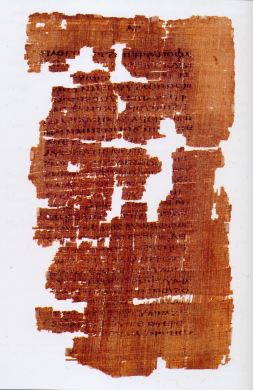
Charlesworth’s rejection of “Gnostic” works like the Acts of John and the Gospel of Judas was not surprising to me. Orthodox trinitarians almost always rapidly dismiss such expressions of Christianity as damnable heresy. But Charlesworth surprised by subsequently listing both The Gospel of Thomas and The Gospel of Truth among the works which we should add to the Bible. Both The Gospel of Thomas and The Gospel of Truth are widely recognized as works of Christian Gnosticism, and these he labeled “writings that will help you grow.” Evidently, for Charlesworth, some Gnostic texts should be tossed, while others should not only be used, but should even be inducted into the biblical canon. Of course, Charlesworth left out any mention of “Gnosticism” that evening.
During the Q&A session, someone did ask why Charlesworth would want to include the infamous Gospel of Thomas “since it teaches that women must become men to be saved.” Their question referred, of course, to the last and most famous logion of GThomas:
“Shimon Kefa said to them, ‘Miryam should leave us. Females are not worthy of life.’ Yeshua said, ‘Look, I shall guide her to make her male, so she too may become a living spirit resembling you males. For every female who makes herself male will enter the kingdom of heaven.’ ” (Gospel of Thomas, 114; trans. Meyer and Barnstone).
Charlesworth’s response to this question was simply to explain the saying. He assured everyone that this was no misogynistic teaching, rather that it meant that all of mankind was to return to its Edenic state before God removed Adam’s rib: an androgynous being containing both male and female. Of course, Charlesworth’s interpretation has more to do with the gender transformation in saying 22 than in saying 114.[1] Regardless, Charlesworth ultimately claimed that GThomas contains some early sayings traditions of Jesus worth adding to our Bibles.
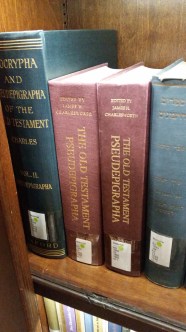 After the lectures, I and a few friends left the chapel and headed to the library for the reception. We stood in a quiet corner, perusing one of the private collections, locating Charlesworth’s books among the many volumes. We discussed the lectures, and felt it a shame that we didn’t get a chance to speak with Dr. Charlesworth, to ask him about Gnostic Christianity. But suddenly, a voice behind us caught our attention: “Are you gentlemen here for autographs?” I turned around to see Charlesworth walking towards us. “No,” I said, walking to meet him, “But I do have a question.”
I first told him that we were Biblical Unitarians, that we held to a “Socinian” Christology. He didn’t bat an eye at this, so I continued with my question (*Note: the following quotations are from memory*):
“Doctor, I recently wrote a book concerning the influence of Gnosticism on Christology in the early centuries of the Church. This evening you referenced several of the Nag Hammadi texts, and rejected some of them from the canon. However, you said that the Gospel of Truth should be included, perhaps as an appendix to our Bibles. Do you agree that this text was written by Valentinian Gnostics, or even by Valentinus himself?”
“Oh, Valentinus,” he said without hesitation, “I believe it was written by Valentinus.”
“Good,” I replied, “I agree with that. But what sort of benefits do you think such a Gnostic work offers Christians today?”
His answer surprised me. “Joy,” he said. “Definitely the joy.”
I knew he was referencing the opening of the Gospel of Truth:
“The gospel of truth is joy to those who have received from the Father…” (Gospel of Truth, 1; trans. Robert M. Grant)
In essence, Charlesworth was saying that what Christ did should bring us joy, and that he “wants that in his Bible.”
But this was a bit strange to me. Wasn’t there plenty of Christian joy in the core NT writings? Couldn’t we also find joy in the other Gnostic writings Charlesworth had rejected in his lecture? And wasn’t there enough questionable material, from the standpoint of catholic orthodoxy, in The Gospel of Truth to override orthodox attraction to the sense of “joy” expressed within it? Valentinus was, and still is, considered a dangerous heretic, an arch-heretic in fact, by every orthodox and proto-orthodox writer of the Church; Valentinus even taught a modified form of the Gnostic Demiurge doctrine, that the god who created our world was imperfect and was not the highest God. Needless to say, I was surprised, and intrigued, that the work of such a theologian was being recommended by an orthodox minister for inclusion in the canon. I pressed further: “But this text you are recommending is certainly representative of Gnostic Christianity, isn’t it?”
“Early Gnostic,” he said quickly. “It’s early. Not the late stuff, the late stuff is no good. But the early…”
“But this is Valentinus,” I said. “He is later; he deliberately catholicized the radical Sethian and Ophite types of Christianity and brought Gnosticism more in line with proto-orthodoxy. Even in his Gospel of Truth we clearly find Gnosticism: the Son was sent down from the Pleroma to save humanity from ignorance—Gnosis of the indescribable Father is what saves us and returns us to the Pleroma…”
He said something along the lines of “knowledge (gnosis) is a funny thing in the NT, in John, and in the Gnostic writings…” and trailed off. He then proceeded to recommend one of his books to me (on the basis of my mention of the Ophites) and turned to sign autographs for several people who’d discovered him in our corner.
 At that moment, I remembered a prominent line from Charlesworth’s lecture: “Jesus is the canon.” This had originally been said in the sense that “whatever Jesus thinks should be canonical.” But the statement “Jesus is the canon” struck me differently in that instant: for Charlesworth, it might be a text’s Christology which largely determines its acceptability for Christian use. For example, Charlesworth had rejected the Gnostic book The Acts of John on the grounds of its illusory, docetic Christology, and for its shuffling away from the suffering of the cross. But the Valentinian Gnostic Christology, a dual-nature theory in which the Savior does have a body capable of suffering… could this sort of Gnostic Jesus be acceptable to Charlesworth?
In my book The God of Jesus in Light of Christian Dogma (2016), I considered at length the Gnostic background of orthodox theological development. In Chapter 3, I examined the Eastern and Western schools of Valentinian Gnosticism, and how closely their Christologies parallel what is today considered catholic dogma. On pp. 101-102 I took notice of the following observation from Kurt Rudolph:
“The early Christian fathers, foremost Irenaeus and Tertullian, strove hard to find forms which make intelligible, in a non-Gnostic sense the prevailing division of the one Jesus Christ. Strictly speaking they did not succeed. Already [German historian Adolf] Harnack was forced to say, ‘Who can maintain that the Church ever overcame the Gnostic doctrine of the two natures or the Valentinian Docetism?’ Even the later councils of the Church which discussed the Christological problem in complicated, and nowadays hardly intelligible, definitions did not manage to do this; the unity of the Church foundered precisely on this… It has often been forgotten that Gnostic theologians saw Christ as ‘consubstantial’ (homoousios) with the Father, before ecclesiastical theology established this as a principle, in order to preserve his full divinity.”[2]
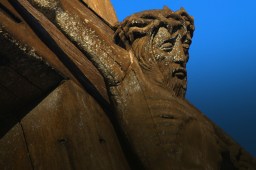 Today, those who hold to the dual-nature Christology of orthodoxy are often compelled on the one hand to reject Gnostic texts which either eliminate or equivocate on the crucifixion of Jesus. But on the other hand, their own Christology forces the same question which the Gnostics were trying to resolve: how can we say that Jesus is by nature a spiritual being, even God, and affirm that he died on the cross? The Valentinian schools had tried to solve the problem of Christ’s deity by saying that the Son suffered in his human nature only, or that a distinct human person in the Savior perished. But when orthodox trinitarians similarly assign the destruction of the cross to the “human nature” of the Son, have they not also moved to preserve the person of the Son from the cross like the Valentinians?
It must be difficult for someone as well-informed as Charlesworth to outright reject Valentinianism when its Christology is fundamentally so close to the elemental principles which motivate the orthodox vision of Jesus. Rejection is difficult, at least, on purely Christological grounds; as one trinitarian scholar recently admitted, “in its more moderate form [Gnostic Christology] is very difficult to differentiate from orthodox Christology…”[3] Could more-or-less orthodox thinking about the person of Christ as God-in-the-flesh be what really counts, despite whatever else an ancient book or theologian might say?
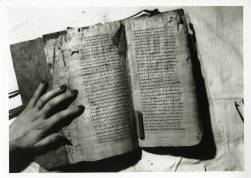
Later that evening I thought about another problem with Charlesworth’s recommendations for the canon. On the one hand he had rejected The Acts of John explicitly because it undermines the suffering of Christ. But a closer examination of The Acts of John reveals an uncanny affinity with the orthodox Christology that someone like Charlesworth should hope to protect.
In section 101 of The Acts of John, the Gnostic Jesus says:
“Nothing, therefore, of the things which they will say of me have I suffered: nay, that suffering also which I showed unto thee and the rest in the dance, I will that it be called a mystery… Thou hearest that I suffered, yet I did not suffer; that I suffered not, yet did I suffer… what they say of me, that befell me not, but what they say not, that did I suffer” (The Acts of John, 101).
Charlesworth had said he rejected The Acts of John because it says that Jesus didn’t suffer. However, in the above quotation, we have not a complete elimination of the suffering of Jesus—there is still a form of suffering experienced. We are not to reconcile the antimony here, rather Christ’s suffering-without-suffering is to be called, as the Gnostic Jesus says, “a mystery.”
This is, of course, the same basic position of orthodoxy regarding the suffering of the Son. The orthodox St. Cyril of Alexandria, in his contest with the Nestorians, mandated that it was not only the human nature which was crucified, but the Logos himself. His conclusion was that the Son “suffered impassibly.” In other words, that Jesus suffered-without-suffering. Evangelical Wayne Grudem concurs that the orthodox Christ “somehow tasted something of what it was like to go through death. The person of Christ experienced death.”[4] Likewise, Gnostic scholar David Brons explains that in the Valentinian Christology, the divine person “endured only the emotional sufferings of grief.”[5] Thus the “suffering” of both the Gnostic and orthodox Christs is a kind of simulation, and a simulation which both the Gnostics and the orthodox claim was efficacious and somehow real. As trinitarian scholars have affirmed, “The impassible suffering of the Logos in the flesh strains, to be sure, the limits of our understanding.”[6] So how are we to approach such a problem? Evidently with (blind) faith, with a reckless embrace of the “mystery.” As was said at the lectures at LTL that evening, either by Charlesworth or by McDonald (I do not recall which), “we may never understand” the death of Jesus. However, the New Testament (as it stands) makes it clear that Christian salvation hinges on a real belief in the death of Jesus; not in the death of a spiritual being’s abstract “human nature,” but in “the death of his Son” (Rom 5:10).
I continue to locate a surprisingly deep affinity between the Gnostic and orthodox ideas about Christ, despite the fact that the orthodox regularly label the Gnostics Christological heretics. Ultimately, my discussion with Dr. Charlesworth has encouraged me to continue to explore Christianity’s ancient encounter with Gnosis. What will we find as we continue to shine a light on that foggy exchange?
Notes:
[1] “Yeshua said to them, ‘When you make the two into one… and when you make male and female into a single one, so that the male will not be male nor the female be female… then you will enter the kingdom” (GThomas, 22; trans. Barnstone and Meyer).
[2] Kurt Rudolph, Gnosis: The Nature and History of Gnosticism (New York: Harper & Row, 1983), p. 372, emphasis added.
[3] Daniel R. Streett, They Went Out From Us: The Identity of the Opponents in First John (De Gruyter, 2011), p. 54.
[4] Wayne Grudem, Systematic Theology: An Introduction to Biblical Doctrine (Downer’s Grove: InterVarsity Press, 1994), p. 556.
[5] David Brons, “The Role of Jesus in Valentianism,” The Gnostic Society Library. Web.
[6] James F. Keating, Thomas Joseph White, Divine Impassibility and the Mystery of Human Suffering (Grand Rapids: Eerdmans, 2009), p. 257.


Leave a Reply